Healing isn’t a straight line...

It is a journey of learning, practicing, and discovering what works best for you. Between therapy sessions, it can be helpful to have simple, practical tools you can turn to when emotions feel overwhelming or when you need to ground yourself in the present moment.
This collection of mental health resources is designed to support your emotional wellness wherever you are in your day. From quick distress tolerance skills to grounding techniques and mindfulness practices, these tools can help you calm your nervous system, reconnect with yourself, and create small moments of relief and clarity.
Grounding Relaxation Techniques
Calm your central nervous system & return to the present moment
5-4-3-2-1 Grounding Exercise:
Use your senses to become fully present: 5 things you can see, 4 things you can touch, 3 things you can hear, 2 things you can smell, 1 thing you can taste or feel internally
Self-Soothing with the senses:
Sight: calming images or nature walks. Sound: music, white noise, or rain sounds. Touch: soft blanket, textured object. Smell: essential oils or fresh scents. Taste: peppermint tea, lemon water, grounding snacks
Box Breathing (4-4-4-4):
Inhale for 4 seconds → Hold for 4 → Exhale for 4 → Hold for 4. Repeat 3–5 rounds.
Mindfulness & Meditation
Simple practices to calm your mind and create space for clarity
Apps You Want to Download:
Insight Timer: Free meditations & sound baths
Headspace or Calm: Great for anxiety and sleep
Mindful Moments: Set reminders on your phone or work calendar throughout the day to pause, check in, and breathe
Setting Reminders:
Mindful Moments: Set reminders throughout the day to pause, check in, and breathe
Walking Meditation: Focus on your breath and surroundings as you move
Box Breathing (4-4-4-4):
Inhale for 4 seconds → Hold for 4 → Exhale for 4 → Hold for 4. Repeat 3–5 rounds.
Emotion Regulation Tools
Skills for riding out intense emotions
Distress Tolerance Tool - TIPP
The TIPP skills are quick techniques designed to regulate emotions by shifting your body’s chemistry. They include:
T - Extreme Temperature - Cold Splash
I - Intense Exercise - Jumping Jacks
P - Paced Breathing - Paced Breathing (use the breathing exercises above)
P - Progressive Muscle Relaxation: Tense your body parts then let them relax.
Distress Tolerance Tool - ACCEPTS
When you’re overwhelmed by emotions, you can distract yourself in healthy ways using the ACCEPTS skills:
A – ActivitiesDo something that engages your mind or body (e.g., read, clean, play a game, go for a walk).
C – ContributingShift focus by helping someone else (e.g., volunteer, call a friend, do a small favor).
C – ComparisonsRemind yourself of times you’ve gotten through worse, or compare your situation to others who have faced difficulties and survived.
E – Emotions (Opposite)Do something that sparks the opposite emotion of what you’re feeling (e.g., watch a funny video when sad, listen to calming music when angry).
P – Pushing AwayTemporarily set aside the distressing situation in your mind; give yourself permission to return to it later.
T – ThoughtsDistract with mental activities (e.g., puzzles, reading, counting, reciting song lyrics or prayers).
S – SensationsUse your senses to ground yourself (e.g., hold ice, take a hot shower, squeeze a stress ball, smell something calming).
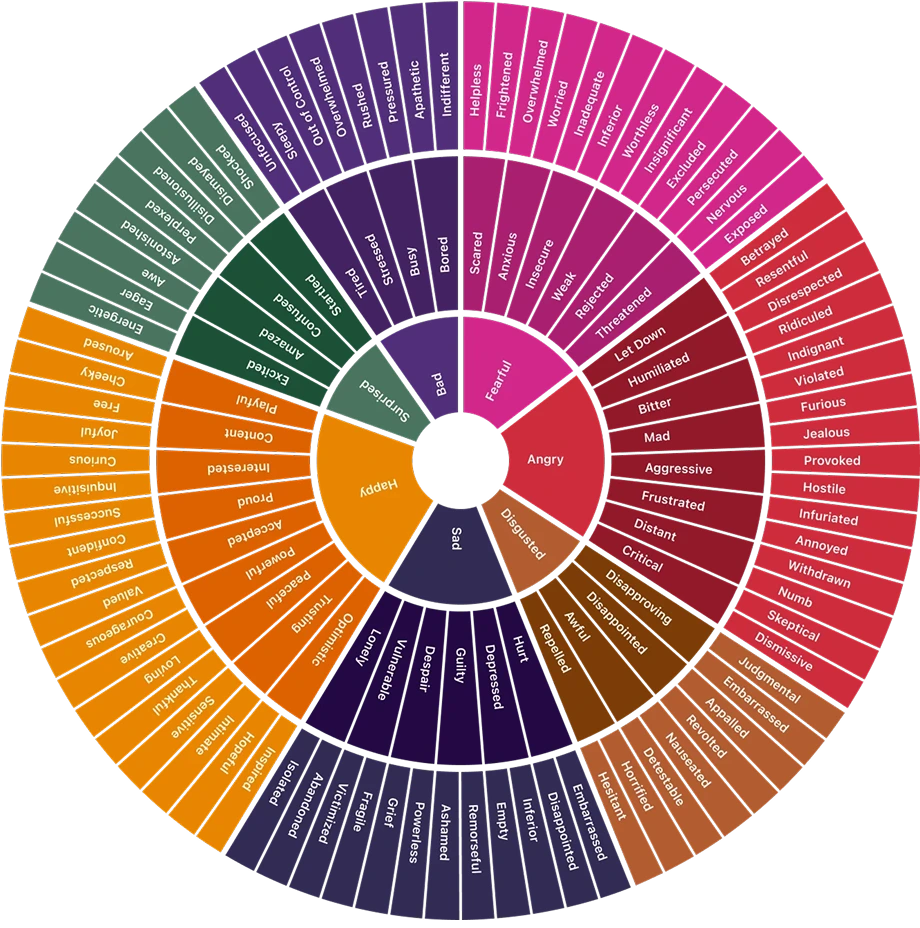
Struggling to name how you feel?
The Feelings Wheel is a powerful mental health tool designed to help you move beyond vague labels like “good” or “bad” and find the exact words that describe your emotional state.
By starting with broad categories, such as sadness, anger, joy, or fear, and working your way into more specific words, the wheel makes it easier to recognize the full depth of what you’re experiencing.
Why is this important? Naming your emotions is the first step toward managing them.